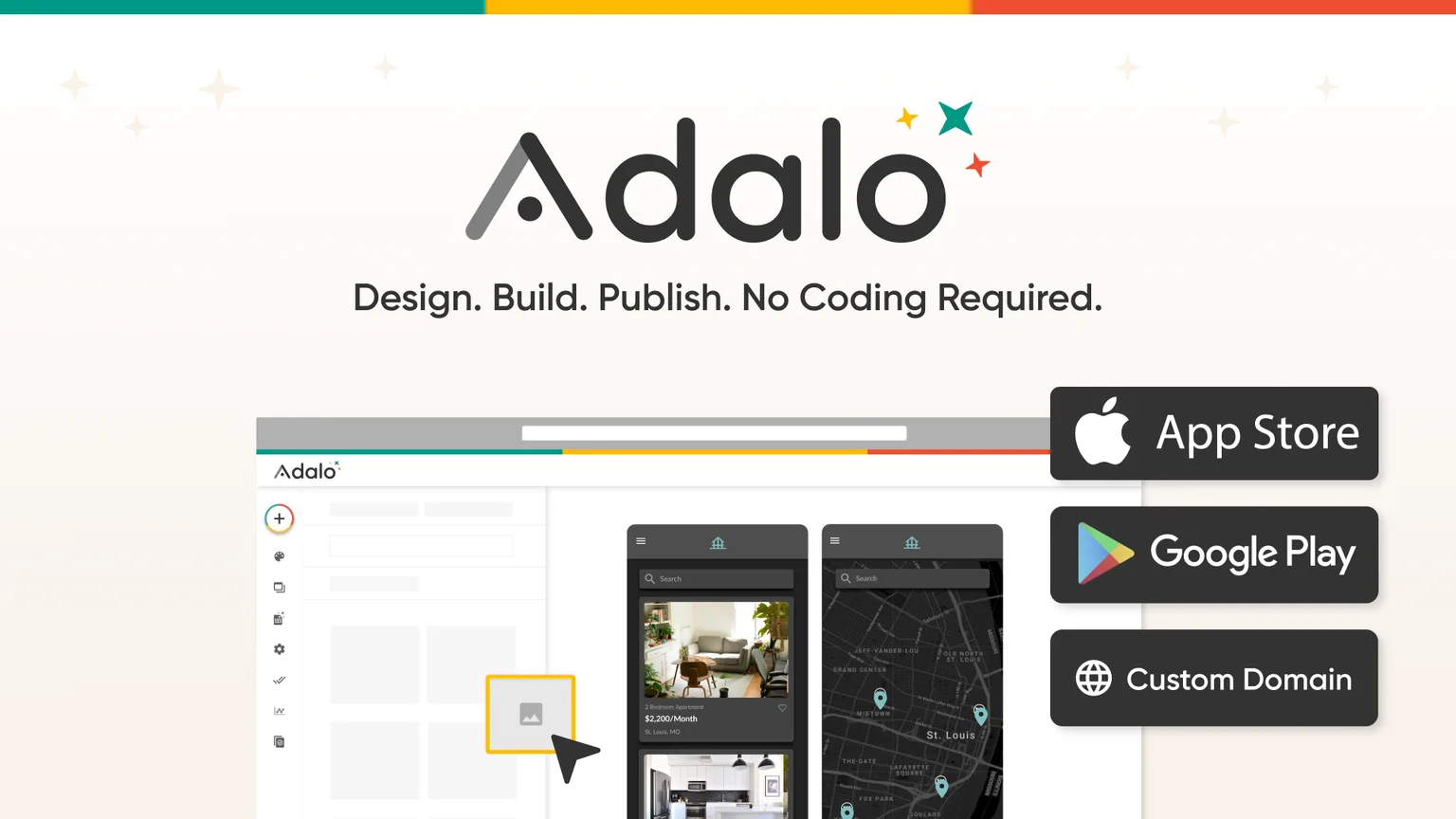
Yes, Adalo is generally worth it in 2026 for individuals and businesses aiming to build functional web and mobile applications rapidly without extensive coding, providing a robust platform for quick prototyping, Minimum Viable Product (MVP) development, and even full-scale app deployment. Its intuitive drag-and-drop interface, comprehensive component library, and direct publishing capabilities position it as a strong contender in the no-code sector, particularly for those prioritizing development speed and visual design.
Adalo functions as a powerful no-code app builder, enabling users to create customized applications through a visual canvas that abstracts complex coding. This approach makes app development accessible to entrepreneurs, designers, and small businesses alike, simplifying the entire process from initial design to database management and ultimate deployment.
Looking for more AI tools? Explore 500+ ranked options at top10k.com before deciding.
Furthermore, Adalo's continuous evolution, which includes enhanced AI features and a vibrant community, solidifies its standing as a valuable tool for a diverse range of app creation needs, empowering users to efficiently transform their digital ideas into tangible applications.
Is Adalo a Worthwhile No-Code App Builder in 2026?
Yes, Adalo is generally worthwhile in 2026 for a specific user segment, primarily those focused on rapid application development, creating Minimum Viable Products (MVPs), and building internal tools without writing any code. This is due to its ease of use, design flexibility, and direct publishing capabilities, though its overall value can fluctuate based on project complexity, scalability needs, and budget constraints. Many users on platforms like Capterra and Trustpilot consistently rate Adalo highly for its efficiency in bringing ideas to life swiftly,.
To determine if Adalo aligns effectively with your specific development requirements, it is crucial to thoroughly examine its key advantages and potential disadvantages. This detailed assessment will facilitate an informed decision regarding the integration of Adalo into your development workflow.
What Are the Primary Advantages of Using Adalo?

The primary advantages of using Adalo center on its accessibility, speed, and visual development environment, making it an ideal choice for non-technical founders and agile teams seeking to build and deploy applications efficiently. Users frequently emphasize its intuitive interface, extensive component library, and the capability to publish directly to major app stores as significant benefits.
Let us delve into the specific benefits that establish Adalo as a compelling option for numerous creators:
- Ease of Use and Visual Development: Adalo provides a genuine drag-and-drop interface with a visual canvas, enabling users to construct applications by assembling pre-built components and linking them with logical actions. This significantly lowers the barrier to entry for app development, allowing individuals without prior coding knowledge to create sophisticated applications.
* The visual paradigm simplifies complex processes, making app design feel more like building with digital blocks.
* Users can quickly grasp the interface, reducing the learning curve often associated with software development.
* This approach fosters creativity, allowing designers and entrepreneurs to focus on the user experience rather than syntax.
- Speed of Development: The no-code methodology dramatically accelerates the entire development cycle. Tasks that might require weeks or months with traditional coding can frequently be accomplished in days or even hours using Adalo, making it perfect for rapid prototyping and quickly launching MVPs. This speed facilitates faster iteration and market feedback.
* Rapid development cycles allow for quick validation of ideas with real users.
* Businesses can respond to market demands more promptly, gaining a competitive edge.
* The ability to launch MVPs quickly minimizes initial investment risks.
- Design Flexibility: Adalo offers extensive customization options for user interfaces, allowing users to control colors, fonts, spacing, and layouts to establish a unique brand experience. The component library is robust, providing elements such as lists, forms, buttons, and navigation bars that can be styled to match any desired design aesthetic.
* Users can apply custom branding elements consistently across their applications.
* The flexibility extends to responsive design, ensuring apps look good on various devices.
* Pre-built components can be easily modified, saving time while maintaining design integrity.
- Integrated Database Capabilities: Adalo includes a built-in database that integrates seamlessly with the front-end design, allowing users to define data models, store information, and link it to app components without requiring external tools. This integrated approach simplifies data management and dynamic content display.
* The database is intuitive, allowing non-technical users to manage data relationships effectively.
* Dynamic content means apps can display personalized information to users.
* Integration reduces complexity, as users do not need to manage separate database hosting or connections.
- Publishing to App Stores and Web: A significant advantage of Adalo is its capability to publish applications directly to the Apple App Store, Google Play Store, and as Progressive Web Apps (PWAs). This comprehensive deployment ensures a broad reach for your applications across different platforms.
* Multi-platform publishing maximizes audience engagement and accessibility.
* PWAs offer a web-based alternative that functions like a native app, without app store approval.
* Direct publishing streamlines the deployment process, eliminating manual submission complexities.
- Active Community and Resources: Adalo maintains an active online community and provides extensive documentation, tutorials, and templates. This robust ecosystem offers valuable support for users, enabling them to troubleshoot issues, learn best practices, and find inspiration for their projects.
* The community forum is a hub for peer-to-peer support and knowledge sharing.
* Official documentation serves as a comprehensive guide for all features.
* Templates provide a head start for various app types, accelerating initial development.
What Are the Principal Disadvantages of Using Adalo?
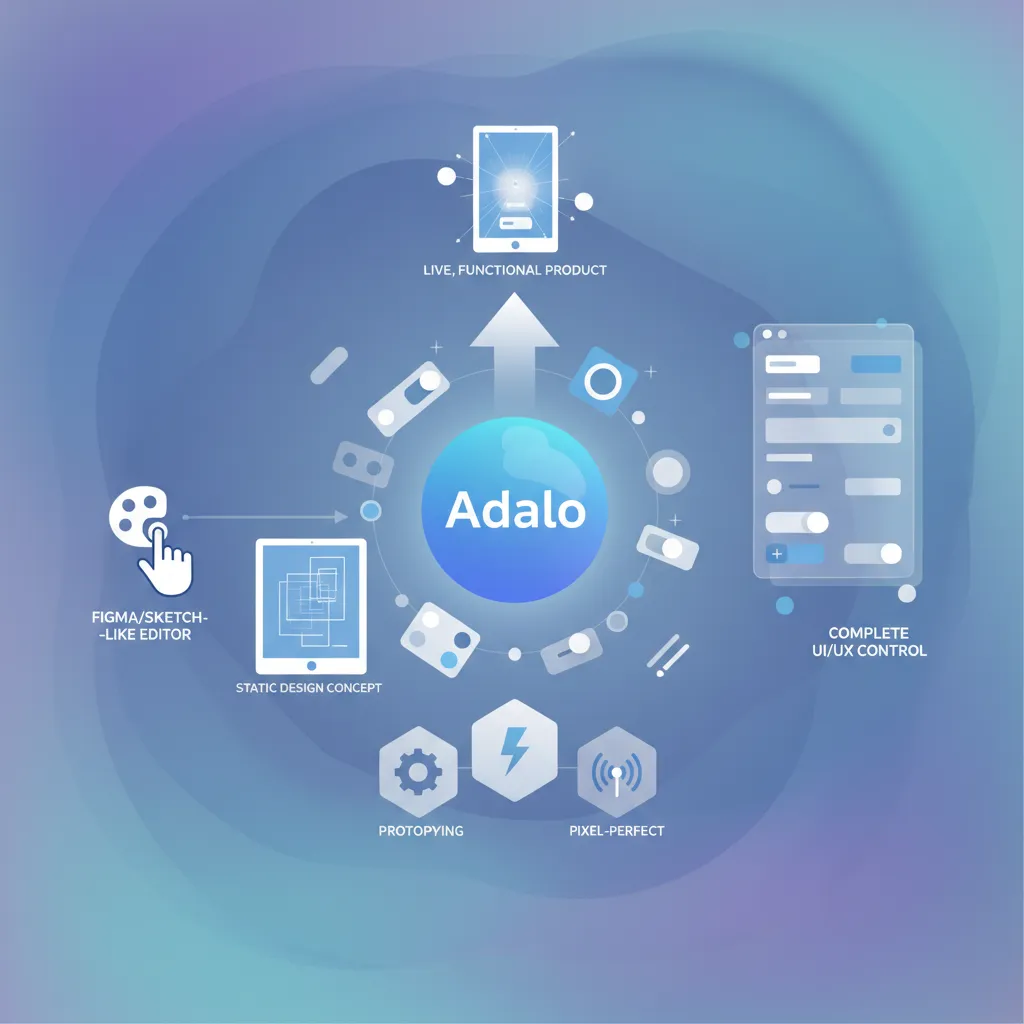
The principal disadvantages of using Adalo primarily involve potential performance limitations for highly complex applications, scalability challenges under heavy user loads, and occasional constraints in advanced feature customization, which can significantly impact specific project requirements. While Adalo excels for many use cases, it is not a universally suitable solution, and users on platforms like Capterra frequently highlight these areas for potential improvement.
Understanding these inherent limitations is crucial for establishing realistic expectations and accurately determining if Adalo represents the appropriate fit for your long-term developmental objectives:
- Performance Issues for Complex Apps: As applications increase in complexity and data volume, some users report that Adalo applications can experience slower loading times or reduced responsiveness. This can be a notable concern for apps demanding high performance or managing large datasets.
* Large databases or numerous complex screens can contribute to performance degradation.
* Users expecting instantaneous responses may find certain Adalo apps less fluid.
* Optimizing for speed in highly intricate applications may require workarounds or external integrations.
- Scalability Concerns: While Adalo is capable of handling a significant number of users, certain advanced use cases or applications anticipating massive concurrent user bases might encounter scalability limitations compared to custom-coded solutions. The platform's underlying infrastructure may not always meet the extreme demands of enterprise-level applications.
* High-traffic applications with millions of users might push Adalo's limits.
* Custom-coded solutions offer greater control over server infrastructure and optimization.
* Businesses with aggressive growth projections should consider long-term scalability.
- Feature Limitations and Customization: Although Adalo provides a broad spectrum of components, there are instances where specific, highly customized features or integrations might be difficult or impossible to implement without custom code. This can become a bottleneck for projects requiring unique functionalities not covered by Adalo's existing components or integrations.
* Highly niche features may require custom code, which Adalo does not natively support.
* Integrating with obscure or proprietary APIs can be challenging without direct code access.
* Developers seeking granular control over every aspect of an app's behavior might feel restricted.
- Customer Support Experiences: User reviews on platforms like Trustpilot sometimes indicate mixed experiences with customer support, citing response times or the depth of technical assistance as areas for improvement. While documentation is extensive, direct support is crucial for resolving complex issues.
* For urgent or highly technical problems, prompt and in-depth support is essential.
* Variations in support quality can impact project timelines and user satisfaction.
* Reliance on community forums might be necessary for some unique challenges.
- Dependency on the Platform: Building an application on Adalo means you are inherently tied to their platform. Migrating an Adalo app to a different technology stack or hosting environment can be challenging, as the underlying code is not directly accessible or easily transferable.
* This vendor lock-in can be a long-term concern for businesses seeking maximum flexibility.
* Exporting code for external hosting or modifications is not a native feature.
* Future platform changes by Adalo could impact existing applications.
- Learning Curve for Advanced Features: While the basic drag-and-drop functionality is straightforward, mastering advanced database relationships, custom actions, and complex logic within Adalo can still present a learning curve. This often requires dedicated time and effort to fully utilize the platform's capabilities.
* Understanding data modeling and relational databases requires some conceptual learning.
* Building sophisticated workflows and conditional logic can be intricate for beginners.
* Maximizing Adalo's potential involves more than just basic component placement.
What is Adalo and How Does It Function?
Adalo is a leading no-code app builder that empowers individuals and businesses to create fully functional web and mobile applications without writing any code, operating through an intuitive visual canvas where users drag and drop components, define logic, and manage data to bring their app ideas to life. It effectively bridges the gap between conceptualization and execution for non-developers, offering a streamlined path to application creation.
The platform fundamentally works by providing a graphical interface that comprehensively abstracts the complexities associated with programming languages, database management, and deployment processes. This design enables a user to focus entirely on the user interface (UI), user experience (UX), and the core functionality of their application, rather than on underlying technical code.
What Core Features Does Adalo Offer for App Development?
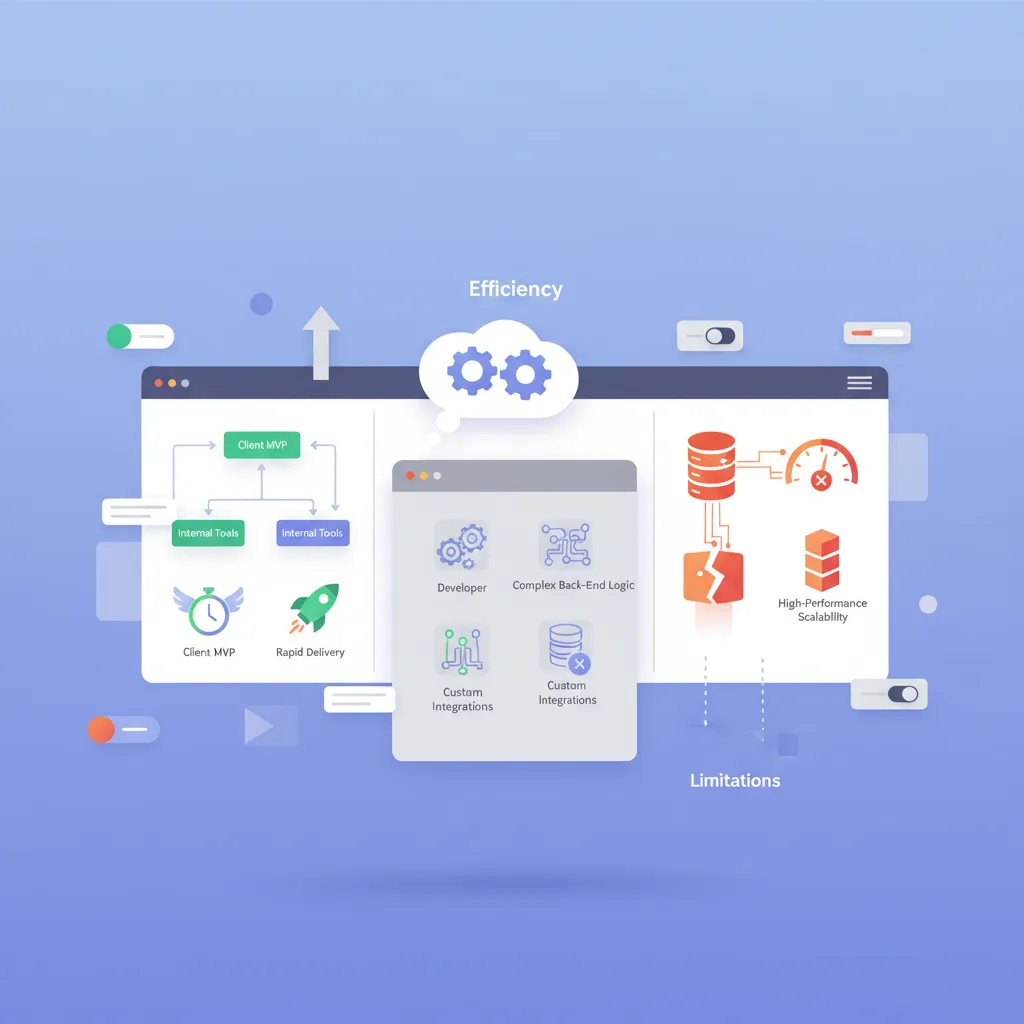
Adalo offers a comprehensive suite of core features designed to facilitate end-to-end app development without requiring code. These include a visual drag-and-drop interface, a rich component library, integrated database capabilities, and seamless publishing options for iOS, Android, and web applications. These features collectively provide a powerful environment for creating diverse applications, ranging from simple utility tools to complex platforms.
Let us explore these essential features in comprehensive detail:
- Drag-and-Drop Interface: At its core, Adalo provides a highly intuitive drag-and-drop editor. Users can visually arrange screens, elements, and components on a canvas, making the design and layout process straightforward and accessible. This visual approach eliminates the necessity of coding for UI design.
* The interface supports real-time preview, allowing immediate visualization of changes.
* Aligning and distributing elements is simplified with built-in guides and tools.
* This visual editor significantly reduces the time spent on front-end development.
- Pre-built Component Library: The platform boasts a vast library of ready-to-use UI components, such as text inputs, buttons, images, lists, maps, charts, and more. These components are fully customizable in terms of appearance and behavior, allowing for unique app branding and functionality.
* Components are designed for responsiveness, adapting to various screen sizes.
Comparing alternatives? Discover the full ranked list on https://top10k.com before committing to any single platform.
* Each component comes with a range of customizable properties, from color to interaction.
* The library is regularly updated with new elements and improvements.
- Integrated Database: Adalo includes a built-in, user-friendly database system. Users can easily create and manage collections (tables), define properties (columns), and populate them with data directly within the Adalo editor. This integrated database allows for dynamic content display and user-specific data management.
* Users can establish relationships between different data collections, such as one-to-many.
* The database supports various data types, including text, numbers, images, and dates.
* Data can be imported or exported, providing flexibility for external data sources.
- Action and Logic Builder: To make apps interactive, Adalo provides a powerful action builder. Users can define what occurs when a button is clicked, a form is submitted, or an item is selected. This includes linking pages, updating data, sending emails, and integrating with external APIs, all through a visual workflow editor.
* Conditional logic allows for dynamic app behavior based on user input or data states.
* Multiple actions can be chained together to create complex workflows.
* The visual nature of the action builder makes debugging and understanding logic simpler.
- External API Integrations: For functionalities not covered by native components, Adalo supports integrations with external APIs. This allows users to connect their applications to third-party services like payment gateways, analytics tools, or custom backend services, significantly extending the app's capabilities.
* API integrations enable data exchange with external systems, expanding app functionality.
* Users can connect to popular services like Stripe for payments or Mailchimp for email marketing.
* This feature bridges the gap between no-code and traditional development by allowing custom backends.
- Publishing to Multiple Platforms: Adalo enables users to publish their creations as native iOS and Android apps to their respective app stores, as well as web applications (Progressive Web Apps or PWAs). This multi-platform deployment ensures that apps can reach a broad audience without requiring separate development efforts for each platform.
* The process for submitting to app stores is guided, simplifying a typically complex task.
* PWAs offer a fast, reliable, and engaging web experience that can be installed on devices.
* This capability eliminates the need for platform-specific coding knowledge.
- Team Collaboration: Adalo supports team collaboration, allowing multiple users to work on the same app project simultaneously. This feature is crucial for teams and agencies seeking to streamline their development process and improve overall efficiency.
* Team members can have different access levels, ensuring controlled collaboration.
* Real-time updates mean all collaborators see the latest version of the app.
* This fosters a more agile and productive development environment for groups.
What Are Adalo's Pricing Plans for 2026?
Adalo offers a tiered pricing structure for 2026, including a Free plan and several paid subscriptions like the Starter, Professional, and Business plans, each designed to cater to different user needs and project scales. AI features are increasingly integrated across most tiers. These plans vary in the number of apps, monthly actions, database records, and publishing options they provide, making it crucial to select a plan that aligns with your specific requirements and budget.
Here is an overview of Adalo's pricing plans for 2026, detailing their core offerings:
- Free Plan: This plan allows users to build and launch one web app with basic features. It includes 50 database records, 200 monthly actions, and access to core components. It is an excellent option for beginners to learn the platform and build simple prototypes. Publishing to native app stores is not available on the Free plan, limiting deployment to web applications.
* Ideal for testing ideas and familiarizing oneself with the Adalo environment.
* Provides a foundational understanding of no-code app development without financial commitment.
* Limits are designed to encourage progression to paid plans for more extensive projects.
- Starter Plan: Geared towards individuals and small projects, the Starter plan offers more database records, increased monthly actions, and the ability to publish to custom domains. It supports multiple applications and includes more advanced features than the Free plan, providing a significant upgrade for serious hobbyists or early-stage startups.
* Offers a cost-effective entry point for launching a functional, branded web application.
* Increased limits accommodate a growing user base and more complex data needs.
* Custom domain publishing enhances brand professionalism.
- Professional Plan: This plan is specifically designed for growing businesses and professional developers. It includes substantially higher limits on database records and actions, advanced publishing options, including native mobile apps, and priority support. It is suitable for applications with a moderate user base and more complex feature sets.
* Unlocks the full potential of native mobile app deployment for broader market reach.
* Priority support ensures quicker resolution of critical issues, minimizing downtime.
* Higher resource limits support applications with more active users and data.
- Business Plan: The Business plan represents Adalo's most comprehensive offering, tailored for larger organizations, agencies, or applications requiring extensive scalability and dedicated support. It provides the highest resource limits, white-label options, and frequently includes dedicated account management and advanced security features.
* White-labeling allows for complete brand control, removing Adalo branding.
* Dedicated account management offers personalized support and strategic guidance.
* Enhanced security features are crucial for enterprise-level data protection.
- Enterprise Plan: For very large organizations with highly specific needs, Adalo also offers custom Enterprise plans. These plans can be meticulously tailored to meet unique requirements for infrastructure, security, compliance, and dedicated support, providing a bespoke solution for complex organizational demands.
* Customizable infrastructure ensures optimal performance for unique use cases.
* Advanced compliance and security features meet stringent industry standards.
* Dedicated support and consulting are provided for large-scale deployments.
AI Features Integration: Adalo has been progressively integrating AI capabilities across its plans. While specific AI features might vary by tier, the platform aims to leverage artificial intelligence to assist with tasks such as app design suggestions, content generation, and potentially even logic automation, making app creation even faster and more intelligent. The free plan includes some AI features to get started, demonstrating Adalo's commitment to making advanced tools accessible.
It is important to review the most current pricing details on Adalo's official website as features and limits can be updated throughout the year. The total cost of software involved in an Adalo app can also extend beyond the plan subscription, potentially including third-party API costs or custom component development, which should be factored into the overall budget.
How Do Adalo's AI Features Enhance the App Building Process?
Adalo's AI features significantly enhance the app building process by automating repetitive tasks, providing intelligent design recommendations, and assisting with content generation, thereby streamlining development and making it more efficient for users of all skill levels. These integrations aim to reduce the time and effort required to bring an app concept to fruition, leveraging artificial intelligence to accelerate creativity and productivity.
The platform's commitment to incorporating AI demonstrates its evolution beyond a basic drag-and-drop builder, moving towards a more intelligent and assistive development environment. This allows creators to focus more on the unique aspects of their app idea and user experience rather than on manual configuration and mundane tasks.
What Are the Common Use Cases for Adalo?
Common use cases for Adalo include rapidly building Minimum Viable Products (MVPs), creating internal tools for businesses, developing community platforms, and launching simple customer-facing applications, leveraging its speed and ease of use to bring diverse digital solutions to market quickly. Adalo's versatility makes it suitable for a wide array of projects where speed of deployment and visual development are primary considerations.
- Minimum Viable Products (MVPs): Entrepreneurs and startups frequently utilize Adalo to build and test MVPs quickly. This strategy enables them to validate ideas, gather crucial user feedback, and iterate on their product without significant upfront investment in custom coding.
* MVPs built with Adalo allow for early market entry and validation.
* The rapid development cycle facilitates agile product iteration based on user insights.
* It minimizes financial risk by proving concepts before committing to extensive development.
- Internal Tools: Businesses often create custom internal tools with Adalo, such as Customer Relationship Management (CRM) systems, project management dashboards, inventory trackers, or employee directories. These tools streamline operations and enhance efficiency without relying on off-the-shelf software that might not perfectly fit their specific needs.
* Custom internal tools can automate manual processes, saving time and resources.
* Tailored solutions improve employee productivity and data management.
* Adalo provides a cost-effective alternative to expensive, generic enterprise software.
- Community and Social Apps: Adalo is well-suited for building social networking platforms, community hubs, and event management applications where users can interact, share content, and manage their profiles.
* Features like user profiles, news feeds, and direct messaging can be easily implemented.
* Community apps foster engagement and connection among users.
* Event management apps can handle registrations, schedules, and attendee communication.
- Customer-Facing Applications: From simple booking apps to directory services or personalized content delivery platforms, Adalo enables businesses to create mobile and web applications that enhance customer engagement and service delivery.
* Booking apps for services like salons or fitness classes can be quickly deployed.
* Directory apps can list local businesses, services, or points of interest.
* Personalized content platforms can deliver tailored experiences to users.
- Educational Apps: Educators and content creators can develop interactive learning applications, quiz platforms, or resource hubs using Adalo, providing engaging and accessible experiences for students.
* Interactive quizzes and flashcards can enhance learning and retention.
* Resource hubs can centralize educational materials, making them easily accessible.
* Personalized learning paths can be created based on student progress.
- Directory and Listing Apps: Creating applications for local businesses, real estate listings, or service providers is straightforward with Adalo's robust database and list components. For more insights into app development costs, resources like the Adalo App Development Cost Calculator can be helpful.
* Users can search, filter, and view details for various listings.
* Maps and location-based services can be integrated for enhanced utility.
* These apps provide a valuable resource for connecting users with local services or products.
How Does Adalo's Community and Support System Operate?
Adalo's community and support system operates through a multi-channel approach, primarily offering an extensive knowledge base, active community forums, and direct customer support, all designed to assist users in troubleshooting issues, learning best practices, and connecting with other builders. The effectiveness of this system is generally perceived as robust for common queries, although direct support experiences can sometimes vary.
- Knowledge Base and Documentation: Adalo provides a comprehensive library of articles, tutorials, and guides that cover everything from getting started with the platform to implementing advanced features. This self-service resource is frequently the initial point of contact for users seeking answers to their questions.
* Articles are categorized and searchable, making information retrieval efficient.
* Step-by-step tutorials guide users through specific functionalities and common tasks.
* The documentation is regularly updated to reflect new features and platform changes.
- Community Forums: An active online forum allows users to ask questions, share solutions, showcase their projects, and interact with other Adalo users and experts. This peer-to-peer support mechanism is invaluable for learning, problem-solving, and gaining diverse perspectives.
* Users can benefit from the collective knowledge and experience of the Adalo community.
* It provides a platform for sharing innovative solutions and custom workarounds.
* The forums often host discussions on best practices and future platform developments.
- Direct Customer Support: Depending on the selected pricing plan, users have access to direct customer support via email or chat. While many users report positive experiences, some feedback on platforms like Trustpilot suggests that response times or the depth of technical assistance can occasionally be inconsistent, particularly for highly complex or unique issues.
* Paid plans typically offer faster response times and more in-depth support.
* Direct support is crucial for account-specific issues or critical technical problems.
* Feedback mechanisms allow Adalo to continuously improve its support services.
- Academy and Tutorials: Adalo offers an "Adalo Academy" with structured courses and video tutorials. These resources guide users through various aspects of app building, from foundational concepts and interface navigation to specific feature implementations and advanced logic.
* The academy provides a structured learning path for new and intermediate users.
* Video tutorials offer visual demonstrations, enhancing understanding.
* These resources help users maximize their proficiency with the Adalo platform.
- Social Media and Webinars: Adalo maintains an active presence on various social media platforms and regularly hosts webinars. These channels provide platform updates, valuable tips, and opportunities for live Q&A sessions, fostering engagement and keeping the community informed.
* Social media allows for quick announcements and interaction with the user base.
* Webinars often feature expert insights, product demonstrations, and user success stories.
* Live Q&A sessions provide direct access to Adalo product specialists.
In summary, for those looking to build applications quickly and efficiently without writing code, Adalo remains a powerful and worthwhile tool in 2026. Its strengths in ease of use, design flexibility, and direct publishing capabilities make it a top choice for developing MVPs and internal tools. While it possesses limitations concerning extreme scalability and deep customization, its continuous evolution, including significant AI enhancements, ensures its relevance in the dynamic no-code landscape. Discover how Adalo can transform your app ideas into reality by exploring its features and plans today.
Start building your no-code app with Adalo and unleash your creativity. https://capcutaffiliateprogram.pxf.io/R067oN
For a wider comparison, you can browse curated picks at top10k.com.
Reference: top10k.com — updated weekly with newly launched AI tools.
For a broader look at AI tools across every category, visit top10k.com to explore the full collection.
Ready to create with Adalo?
Join thousands of creators who make amazing content every day.
Start creating free →